About Fraunces Tavern

Washington’s Farewell to the Officers of his Army, Currier and Ives (active 1835-1907), Lithograph with hand painted watercolor, 1876, Collection of Fraunces Tavern Museum, X103
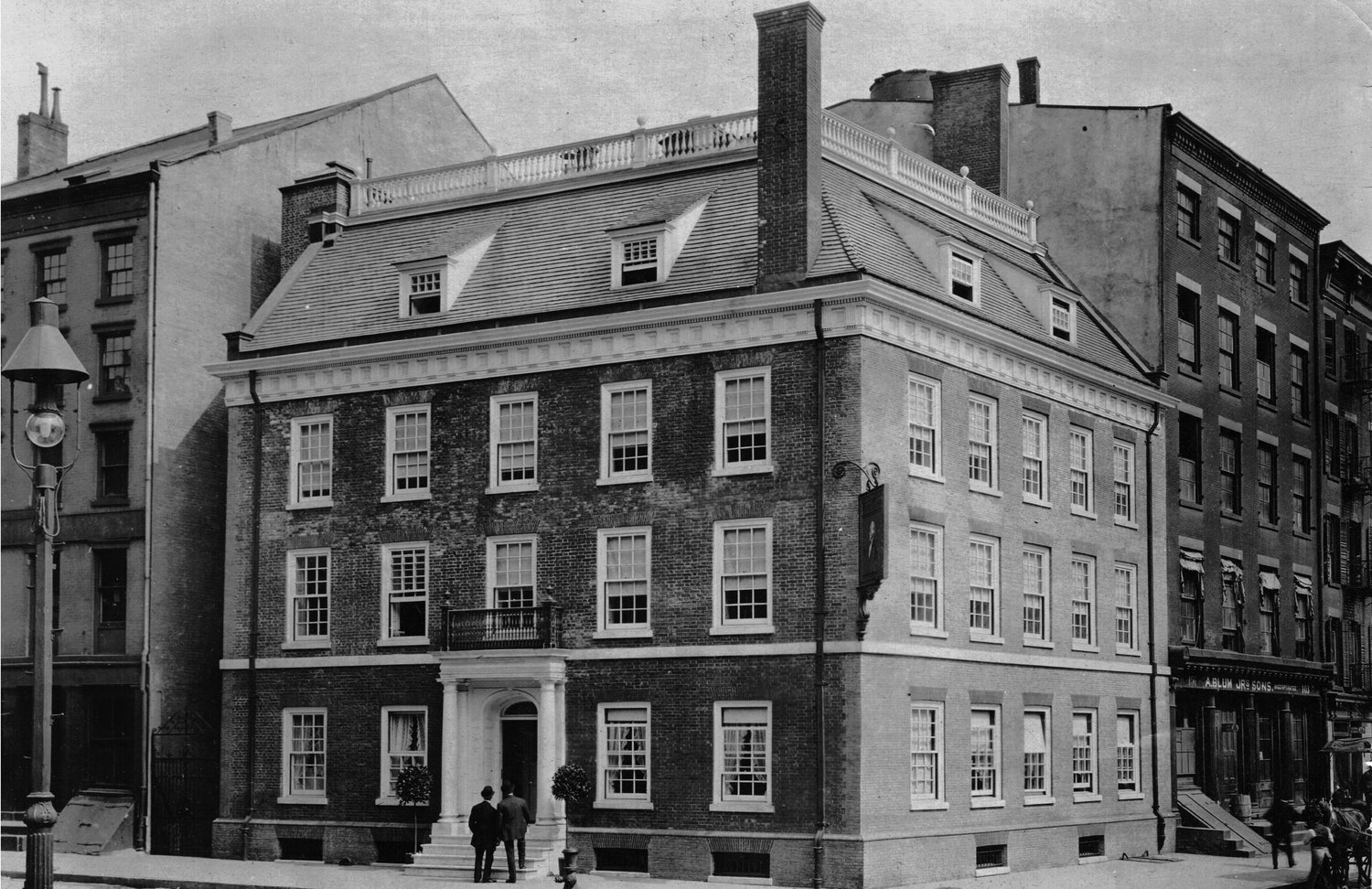
Fraunces Tavern was a witness to history throughout the American Revolutionary era. First constructed in 1719, the building that would become Fraunces Tavern was built as an elegant residence by merchant Stephen Delancey. In 1762, Samuel Fraunces purchased the building and transformed it into a tavern that soon became an epicenter of Patriot activity in New York. Fraunces Tavern served as a meeting place for the Sons of Liberty in New York before the War for Independence began. During the British Army’s occupation, Samuel Fraunces aided Patriots aboard prison ships in New York Harbor and passed on intelligence to the Continental Army. At the end of the War, as the British Army and Loyalists prepared to evacuate, Fraunces Tavern was the site of proceedings conducted by a joint British-American commission that were part of a process that led to the emancipation of thousands of Black Loyalists. General George Washington celebrated the evacuation of the British Army from New York City at Fraunces Tavern on November 25, 1783. On December 4, 1783, nine days after the British Army evacuation, Washington delivered his emotional farewell to his officers in Fraunces Tavern’s Long Room. From 1785 to 1788, Fraunces Tavern became the nation’s first executive office building, housing three departments of the new government under the Articles of Confederation ─ Foreign Affairs, War, and offices of the Board of Treasury.
Fraunces Tavern is the oldest building in Manhattan. It is a New York City landmark and is listed on the National Register of Historic Places. Today, there is a bar and restaurant on the lower floors and a museum on the upper floors.
About Fraunces Tavern Museum
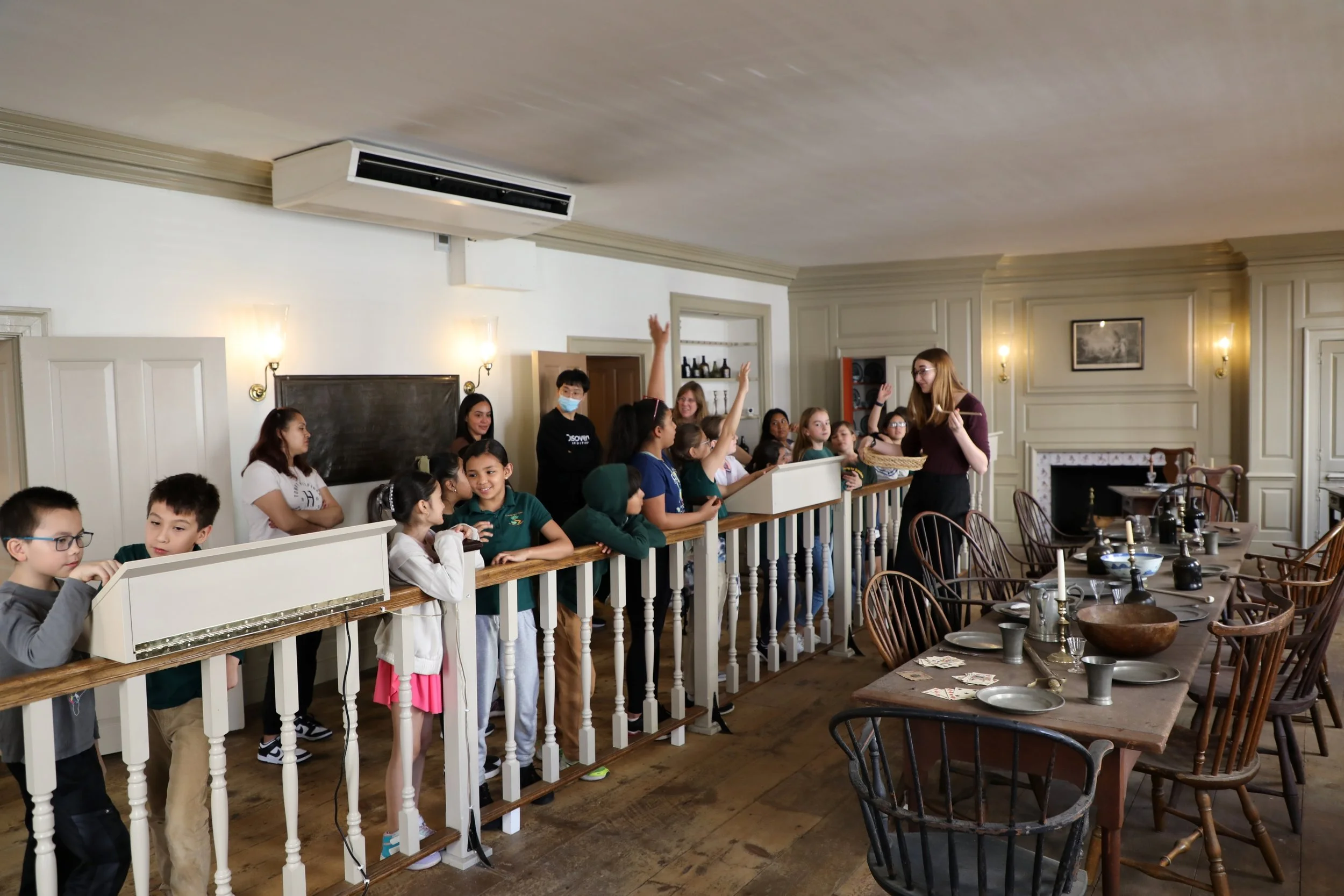
Established in 1907 after a landmark restoration that preserved the integrity of the original Fraunces Tavern building, today, the Museum is located in a five-building complex within a Historic District on the National Register of Historic Places that includes Fraunces Tavern. The Museum attracts tens of thousands of visitors including school children annually who can explore exhibitions focusing on America’s War for Independence and the preservation of early American history. The Museum’s 8,000-piece object collection consists of furnishings, communications, other documents, personal artifacts, and art. While a fraction of the collection is on display at any given time, a significant portion of the collection is available to view on the Museum’s website.